Glacier-carved valleys
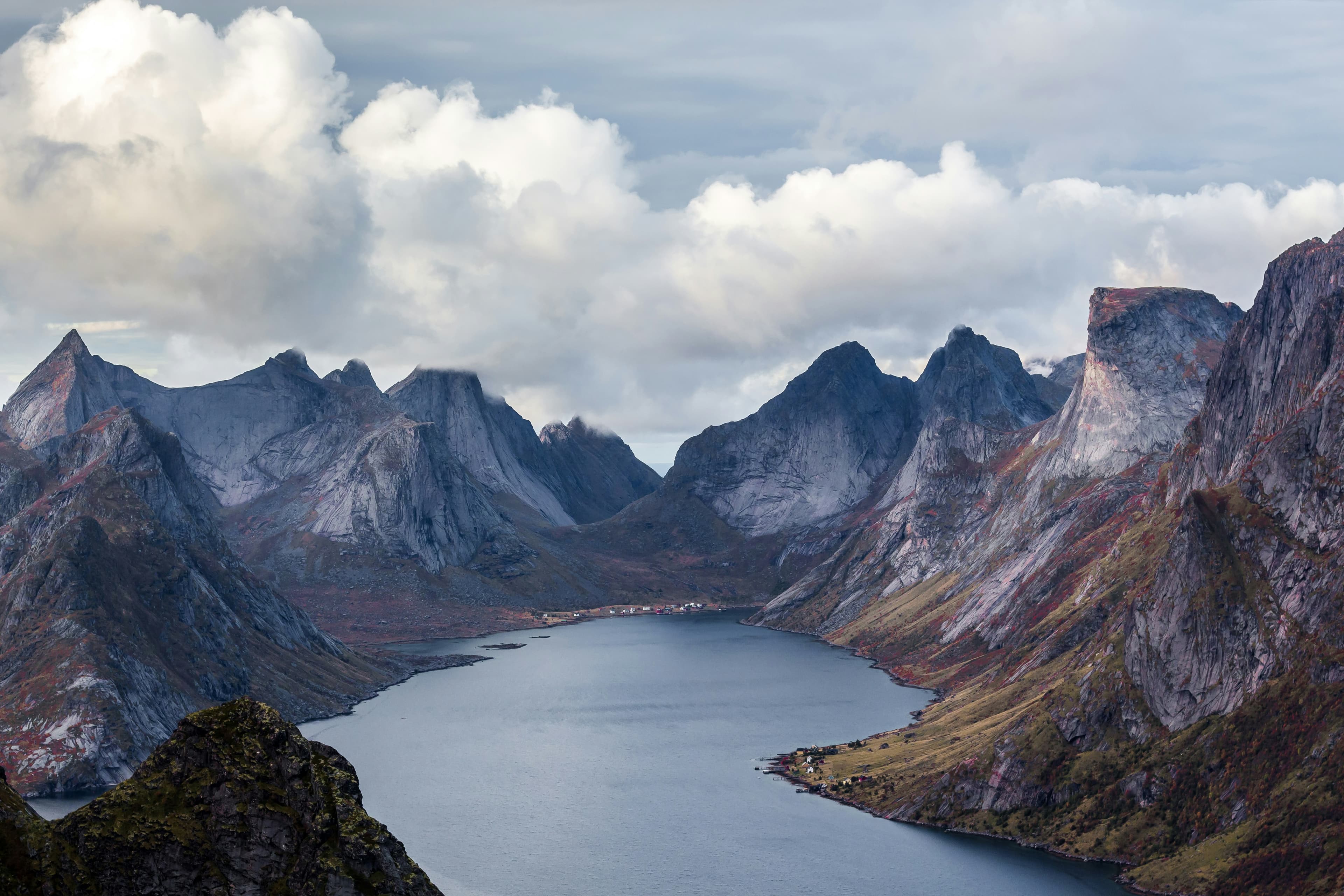
Fjords are valleys cut by ice and later filled by seawater, which is why the landscape narrows, steepens and slows the journey.
Destination guide
Choose one fjord region by base and travel style: Flåm for a car-free Nærøyfjord trip, Ålesund for Geirangerfjord by boat and road, Bergen for a Hardangerfjord self-drive, or Stavanger for a Lysefjord hiking trip. Allow 3–4 days for one compact base or 5–7 days for a fuller regional trip.
At a glance
Choose one connected region. Allow 3–4 days for a compact base or 5–7 days for a fuller regional trip; the right choice depends on whether you prefer car-free transport, self-driving, boat travel or hiking.
01 / Overview
Fjords narrow the land available for settlement, so farms and villages gather on shorelines, terraces and valley mouths. Working quays connect these communities to boats and ferries, while roads, tunnels and bridges follow the ground that remains.
Fjords are valleys cut by ice and later filled by seawater, which is why the landscape narrows, steepens and slows the journey.
Crossings, tunnels, viewpoints and short detours matter as much as distance once you start planning a fjord route.
Nærøyfjord can be planned around boats and public transport, while Hardangerfjord combines roads, local ferry crossings and longer self-drive loops.
02 / Regions
The practical map is regional: choose one connected group rather than treating every famous fjord as part of a single short circuit.
Bergen, Hardangerfjord, Flåm, Aurlandsfjord and Nærøyfjord make a natural western cluster when you allow time for ferries, mountain roads and weather.
This is a distinct northern-western road-trip group, combining fjord, glacier country and mountain scenery without returning to Bergen between each stop.
Treat Lysefjord as its own southern cluster, with Stavanger as the practical base for boat views and hiking access.
Build Trollfjord with Lofoten and Vesterålen. Senja and Lyngen are separate Arctic fjord landscapes, not quick additions to a short western-fjord trip.
Explore the landscape
Start with the experience you want, then keep the trip inside one connected region rather than trying to reach every famous fjord.
Fjords of Norway
Landscapes shaped by ice, water and slower journeys.
Møre og Romsdal / Sunnmøre
A fjord of steep walls, waterfalls, road viewpoints and boat travel. Together with the separate Nærøyfjord area, it forms the UNESCO World Heritage property West Norwegian Fjords – Geirangerfjord and Nærøyfjord.
Further regional guideRelated landscapes
Møre og Romsdal / Sunnmøre
A fjord of steep walls, waterfalls, road viewpoints and boat travel. Together with the separate Nærøyfjord area, it forms the UNESCO World Heritage property West Norwegian Fjords – Geirangerfjord and Nærøyfjord.
Further regional guideVestland / Sogn
A practical car-free choice: boat and public-transport links connect Flåm, Aurland and Gudvangen. Nærøyfjord branches from Aurlandsfjord within the wider Sognefjord system.
Vestland / Sogn
Norway’s largest fjord system and a travel region rather than one stop. Aurlandsfjord branches from Sognefjord, then Nærøyfjord branches from Aurlandsfjord; choose one part of the system rather than attempting all of it.
Further regional guideVestland / Hardanger
Well suited to a multi-day self-drive, with orchards, waterfalls, ferries and Norwegian Scenic Route Hardanger in one connected region. It pairs naturally with Bergen, but needs time rather than a rushed detour.
Rogaland / Stavanger area
A Stavanger-based fjord for hiking-focused trips, with Preikestolen, Kjerag and boat views. Treat it as its own southern cluster rather than adding it to a short western-fjord loop.
Vestland / Sogn
A branch of Sognefjord where Flåm and Aurland sit by the water. It links naturally with Nærøyfjord and Gudvangen by road, boat and public transport.
Vestland / Nordfjord
A road-trip region combining fjord, glacier and mountain scenery. It works naturally with Geirangerfjord and Ålesund rather than the Bergen–Flåm cluster.
Møre og Romsdal / Sunnmøre
A Sunnmøre fjord near Ålesund, suited to slow road and ferry travel between small harbours and steep mountain landscapes rather than a cross-country detour.
Nordland / Lofoten–Vesterålen
A Northern Norway boat-trip experience on the Lofoten–Vesterålen side of the country. Keep it inside an Arctic itinerary rather than a short western-fjord circuit.
Continue the journey
Five paths into a slower Norway journey — shaped by roads, ferry crossings, changing light and the landscapes you choose to follow.
Use the left and right arrow keys, swipe the active card, or use the position buttons to choose a planning path.
Showing Browse published road-trip routes, card 1 of 5.
01 / ROUTES
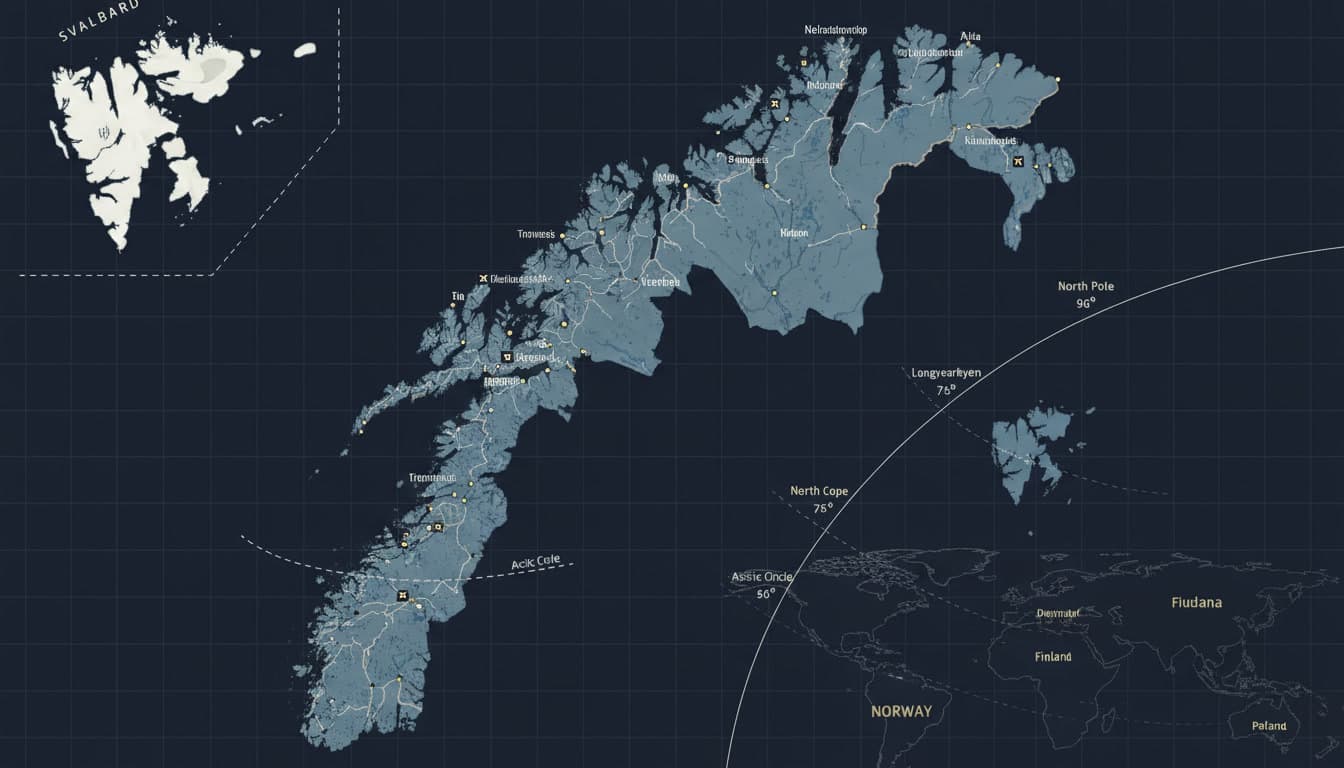
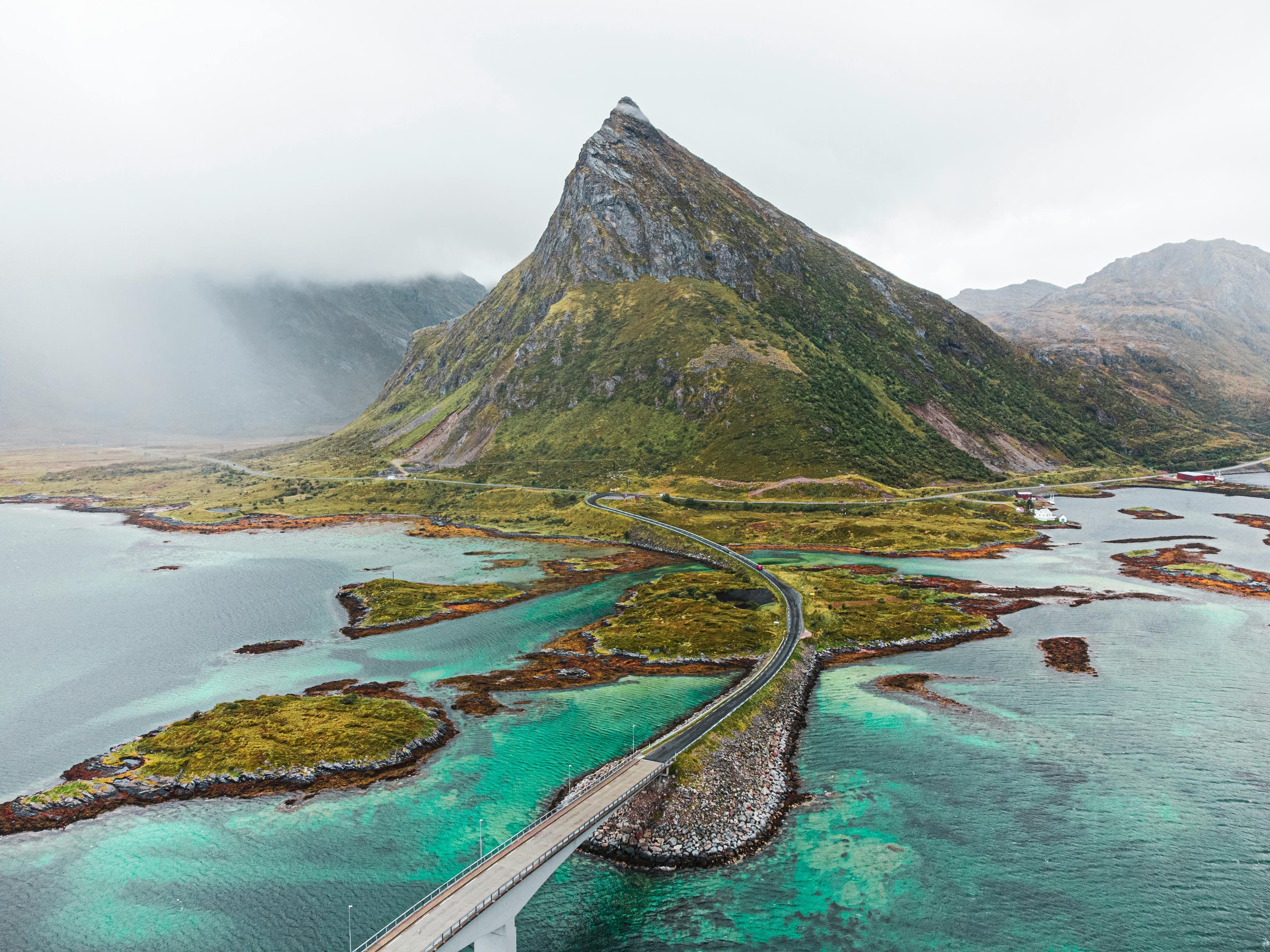
Open the published Lofoten and Helgeland Coast route guides. For a Western Norway plan, use this page’s regional comparison with the Norway map.
Browse published route guides04 / Northern Norway
Use Svolvær as the practical base for Trollfjord and connect it with Lofoten or Vesterålen. Treat Senja as a separate road-based fjord landscape, and Tromsø as the gateway for Lyngen rather than combining the north with a short Bergen or Ålesund trip.
Trollfjord has no road access. Boat trips depart from Svolvær, so plan it with a Lofoten or Vesterålen stay rather than as a drive-through stop.
Senja is a separate road-based fjord landscape. Build time around Norwegian Scenic Route Senja and its village detours instead of treating it as an extension of Trollfjord.
Use Tromsø as the gateway for Lyngen, then confirm road, ferry and hiking conditions for the season. Aurora viewing requires darkness, clear skies and sufficient auroral activity, and is never guaranteed.
Northern fjords
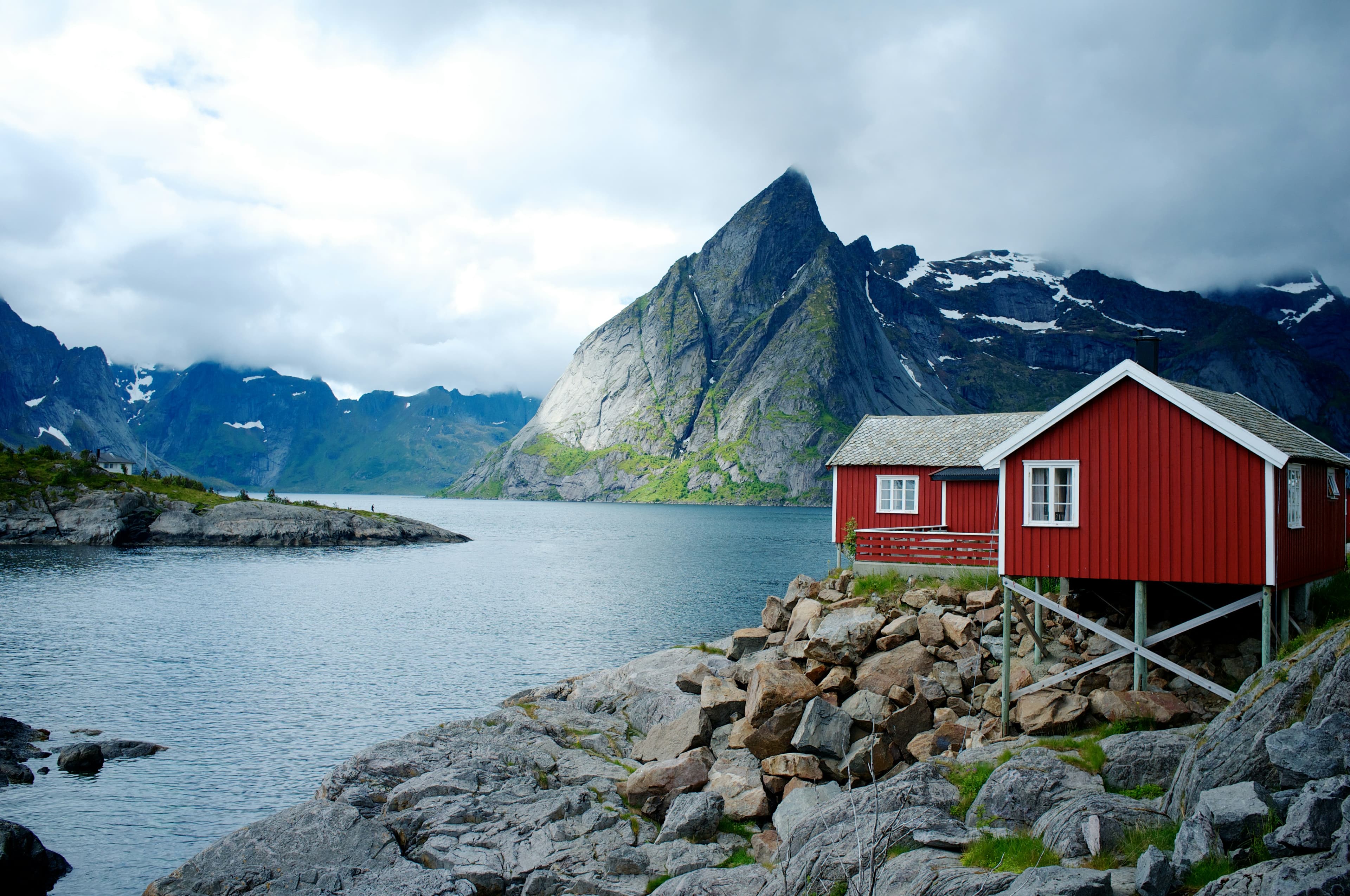
A red waterfront cabin beneath a steep mountain in a Northern Norway fjord.
05 / Timing
Season matters because roads, ferries, daylight and weather windows all shape how the fjords feel in practice.
Longer daylight makes multi-stop driving easier. Mountain-road openings, ferry timetables and hiking access still require route-by-route checks.
Open guideShorter daylight, winter driving and possible weather disruption make long circuits harder. Use a smaller route and check roads, ferries and activities as you travel.
In May, snow can still limit high mountain roads and hikes. In September, daylight shortens and some seasonal services may reduce; confirm each road, ferry and activity.
06 / Movement
The cleanest fjord trip is rarely the shortest one. Match the route to the experience you want, then plan roads, boats and overnight stops together.
Nærøyfjord is a practical car-free choice through Flåm, Aurland and Gudvangen, while Geirangerfjord’s waterfalls and fjord farms can be seen from the water.
Open guideHardangerfjord and Nordfjord reward a slower drive through connected scenery; Geirangerfjord belongs in the Ålesund–Nordfjord road-trip group.
Open guideLysefjord is the clearest fit for a hiking-led stay, using Stavanger as the base and weather as part of the plan.
Open guide07 / Planning mistakes
The most common problem is trying to fit too much into a region where distance, ferry timing and weather all matter.
Bergen–Hardanger–Flåm, Ålesund–Nordfjord–Geiranger, Stavanger–Lysefjord and Arctic Trollfjord are separate planning groups. Choose one for a short trip.
Treat crossings as fixed points and leave room for queues, loading and weather.
The map can be deceptive when water, tunnels and scenic detours are part of the route.
08 / Responsible travel
The fjords reward careful travel. Small choices make the experience calmer for both visitors and local communities.
Protect the landscape and avoid unsafe roadside stopping.
Open guideSome of the best views sit on roads that leave almost no spare shoulder.
Cafes, cabins and small shops help the trip feel grounded in the communities you pass through.
09 / Trip styles
Choose a timeframe and one connected region. Fjord trips work better when days are built around manageable geography rather than a famous-name checklist.
3–4 days
Use one base or compact pair: Bergen with a selected Hardanger or Flåm–Aurland–Nærøyfjord experience, Stavanger with Lysefjord, or Ålesund with one nearby fjord.
5–7 days
A western journey can follow Bergen, Hardangerfjord, Flåm, Aurlandsfjord and Nærøyfjord; a Northern Norway route can centre on Lofoten, Vesterålen and Trollfjord.
7–10 days
Use the extra time for Nordfjord, Geirangerfjord and Ålesund, or for a slower Bergen–Sognefjord journey with room for changing light and weather. Keep Senja or Lyngen for a separate Arctic itinerary.
10 / FAQ
A few quick answers help turn the overview into a usable plan for first-time fjord travel.
Most of the famous fjords sit in Western Norway, but the north has dramatic fjord landscapes too.
For most first trips, May to September gives longer daylight. Mountain-road openings, ferry timetables and hiking access still need route-by-route checks.
There is no single best city. Choose Bergen for Hardangerfjord and journeys towards the Sognefjord arms, Ålesund for Geirangerfjord and Hjørundfjord, Stavanger for Lysefjord, or Svolvær for Trollfjord boat trips.
Related paths
Continue planning
Place the fjords inside a realistic route, then adjust the journey around season, ferry timing and weather.
Get occasional field notes, practical travel updates and new routes from across Norway.
Loading the email form…
No spam. Unsubscribe anytime. Read our Privacy Policy.