Coastal History · 1890–1955
1890 — 1955
Life on the Helgeland Coast
Across the islands of Helgeland, preserved rooms and everyday objects open a window onto a coastal society shaped by fishing, small-scale farming, family labour and the sea.
Scroll through the rooms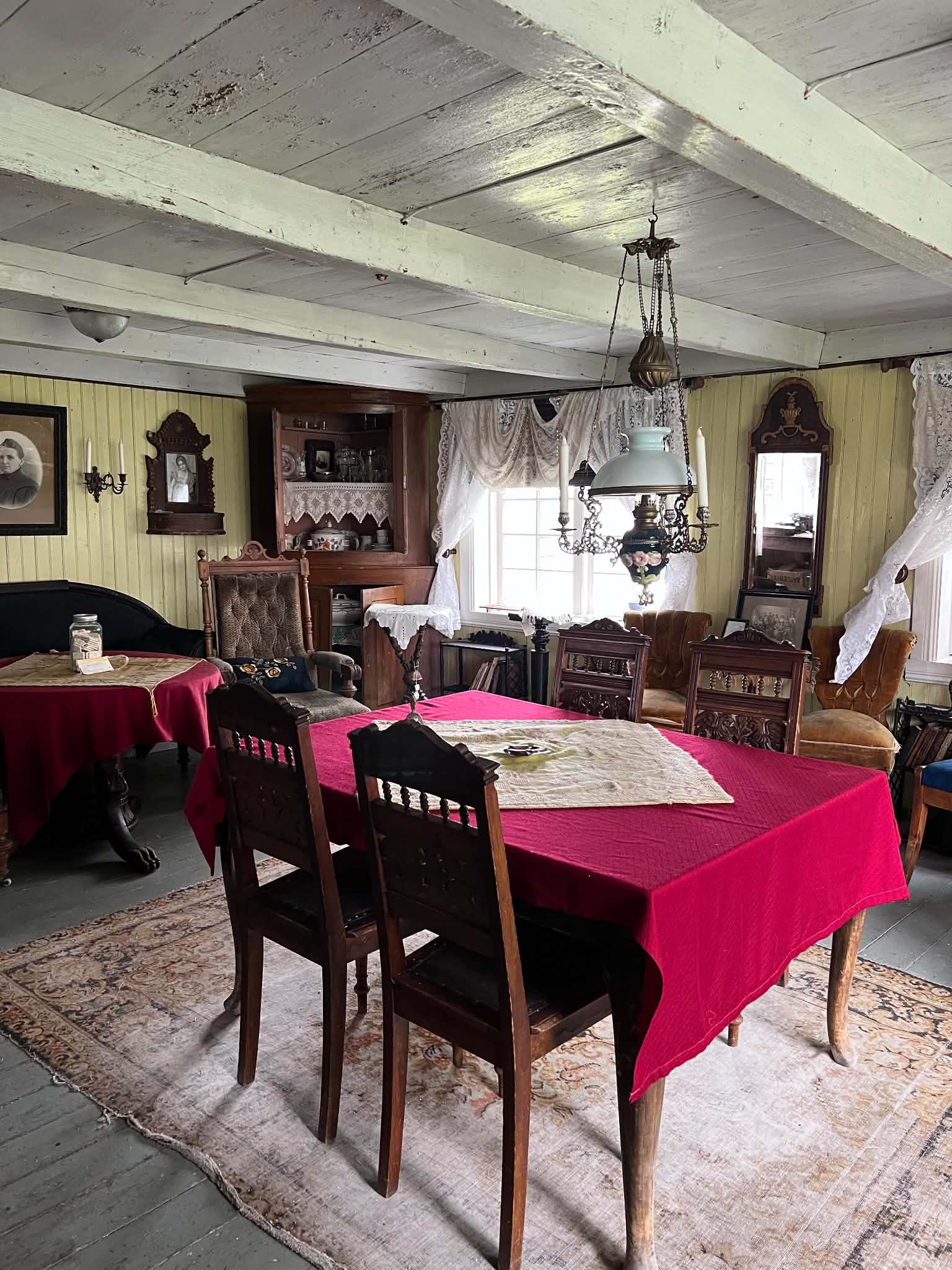
A visual record, read with care
Rooms hold traces. Records give them context.
A merchant household on Nesna, a fishing family on Træna and a household in the outer islands of Vega could live with very different resources, routines and access to the wider world.
These rooms cannot tell every story on their own. Their objects become most meaningful when placed beside photographs, public records, local histories and the memories of people who lived along the coast.
They do, however, retain traces of daily routines, skilled work, family life and practical adaptation in a landscape closely tied to the sea.
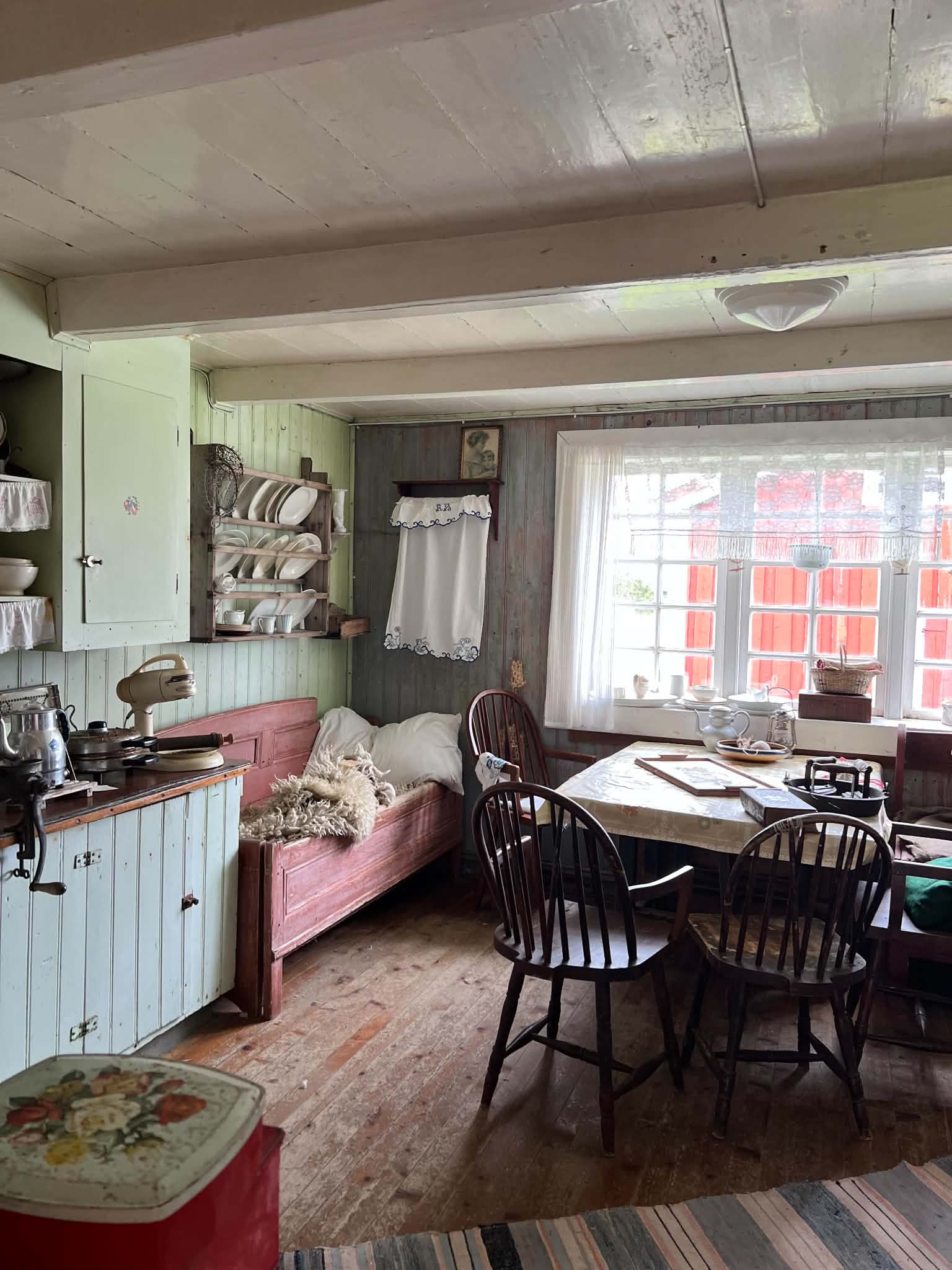
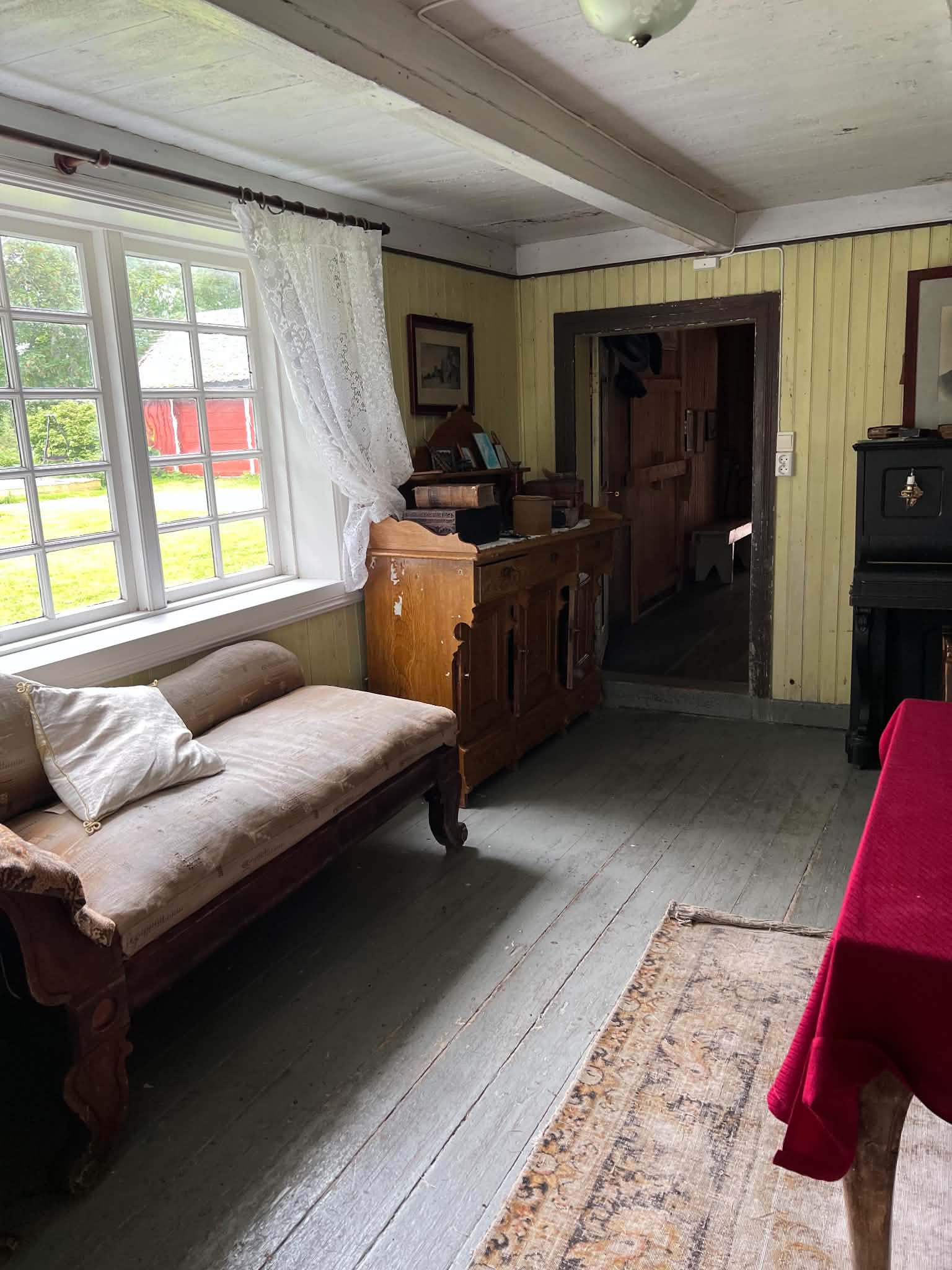
Preserved interior
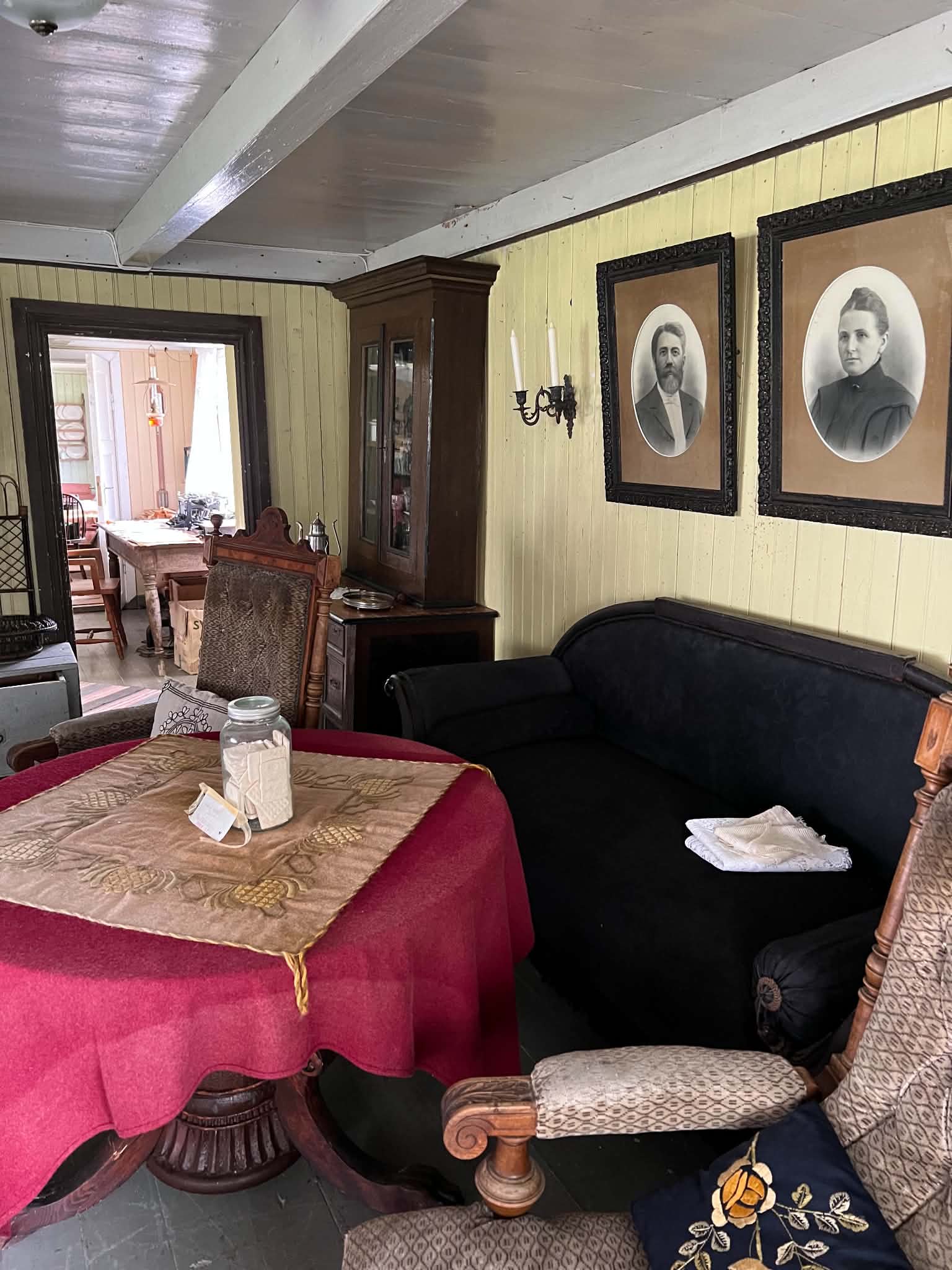
A coastal kitchen and living space photographed in a preserved collection on Helgeland.
ProvenanceExact household, island and object history have not yet been independently verified.
Object chapter I
The room
The coastal home
Living rooms, kitchens and sleeping spaces formed the centre of family life. Furniture was made to last, rooms were used carefully, and useful objects could remain in a household for generations.
Around the turn of the twentieth century, many homes along the Helgeland coast were places for both living and working. Cooking, sewing, weaving, repairing equipment, writing letters and preparing for journeys could all happen beneath the same roof.
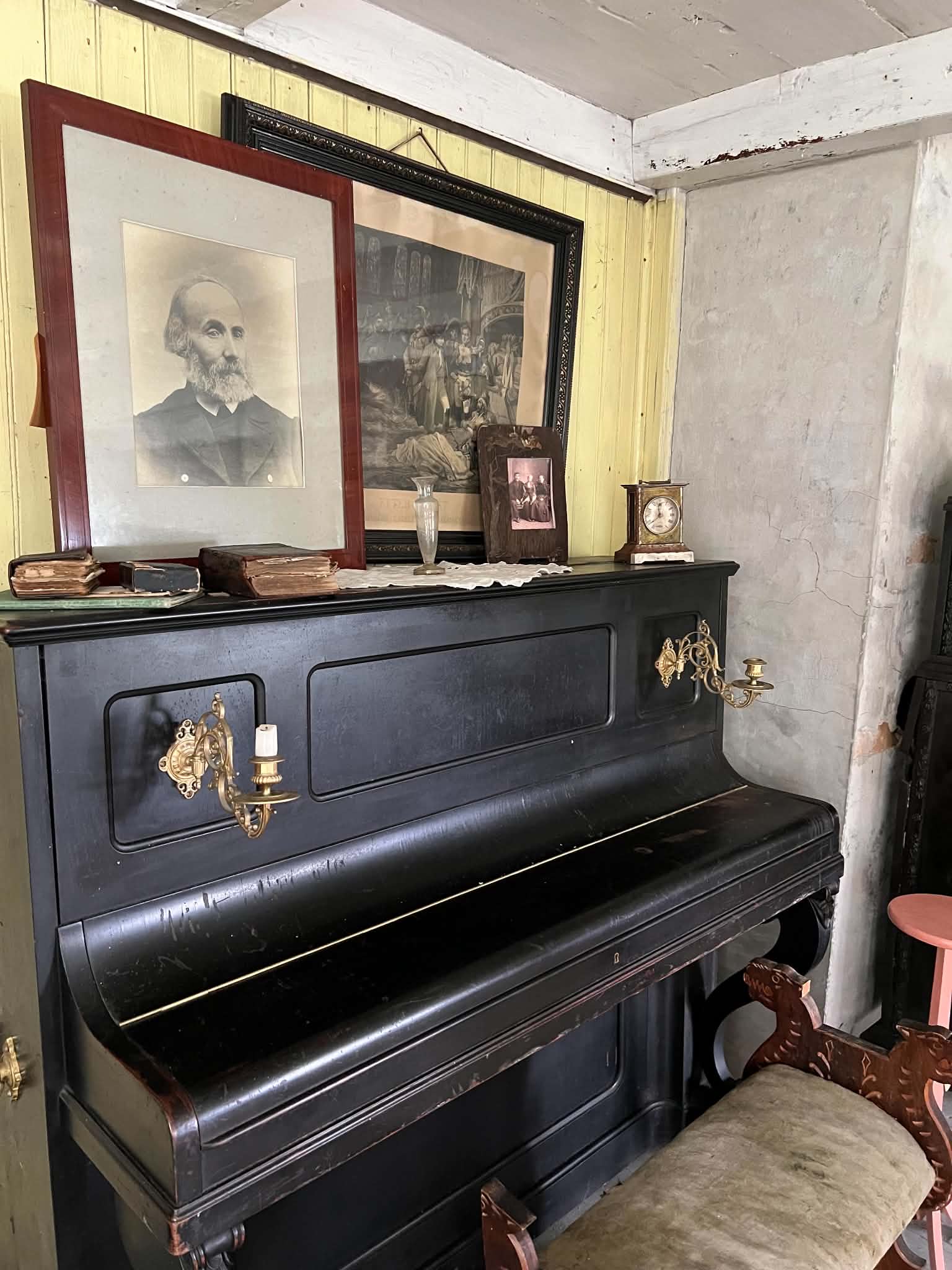
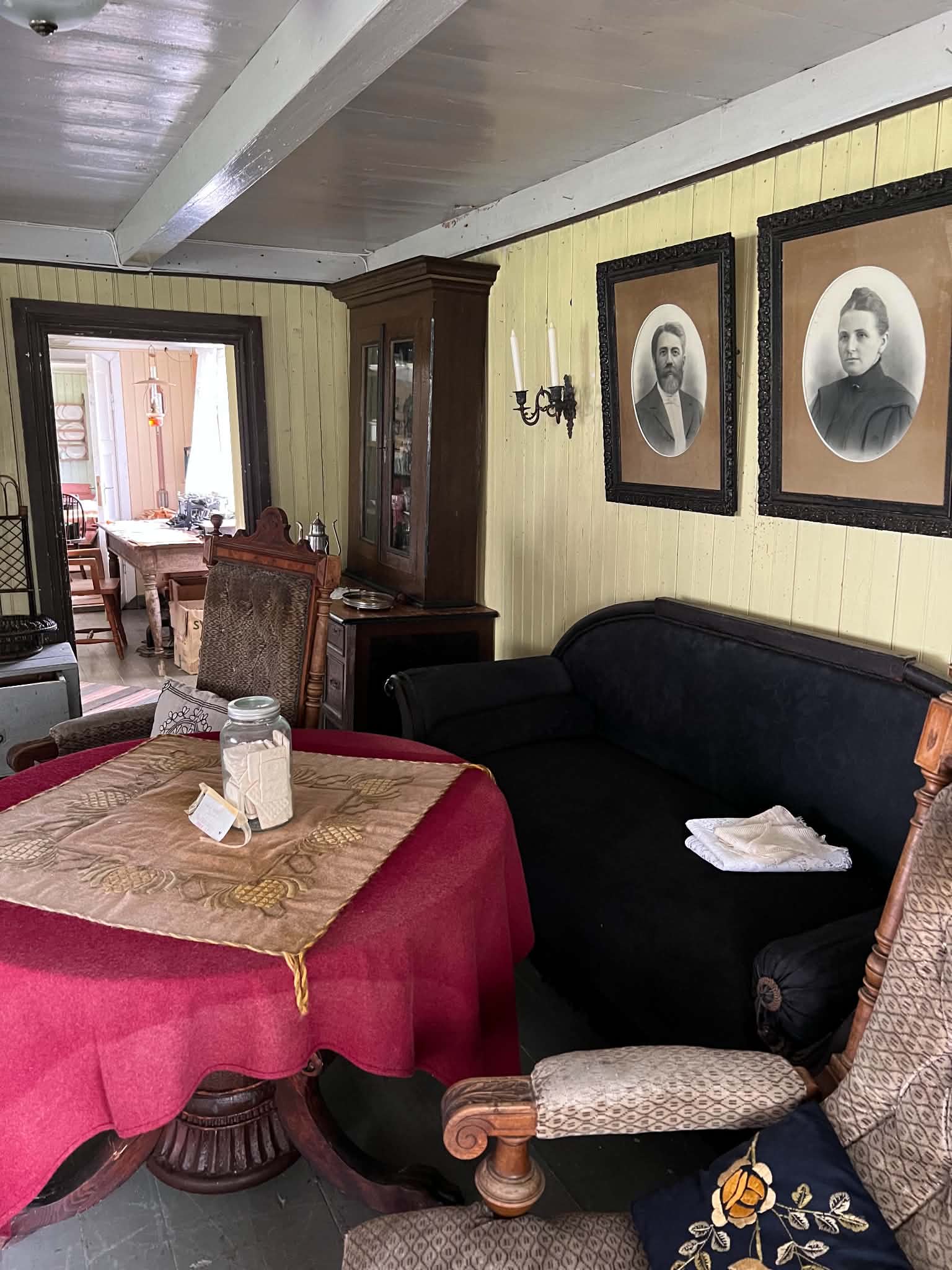
The preserved interiors show different arrangements of floorboards, furniture, portraits, books, textiles and tables prepared for work or company. They should be read as distinct rooms rather than a single model for every coastal household.
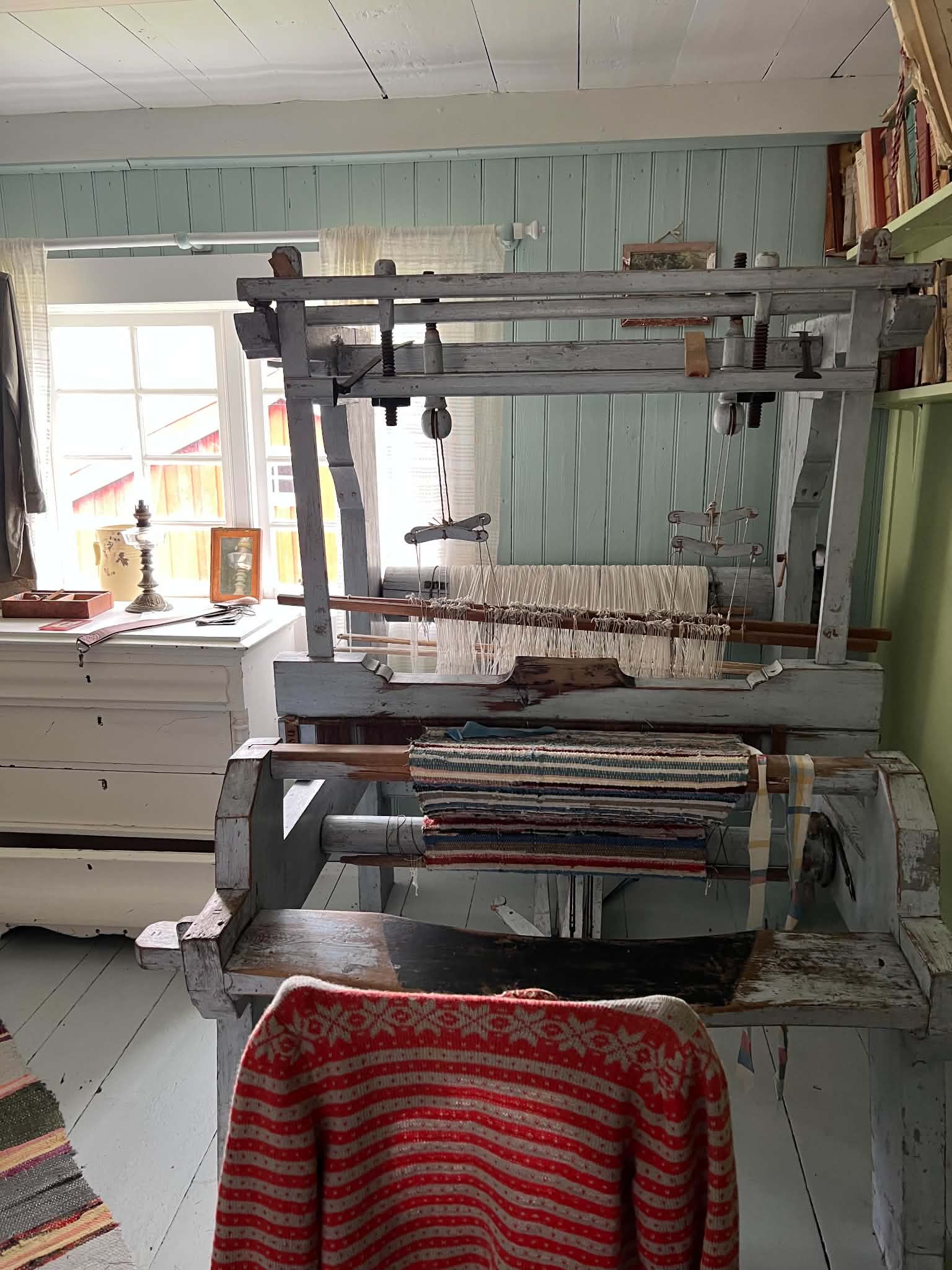
Preserved workroom
A loom photographed among preserved interior materials and practical household equipment on Helgeland.
ProvenanceThe photograph is used as a visual entry point, not as evidence for a named household or year.
Object chapter II
The loom
Work made by hand
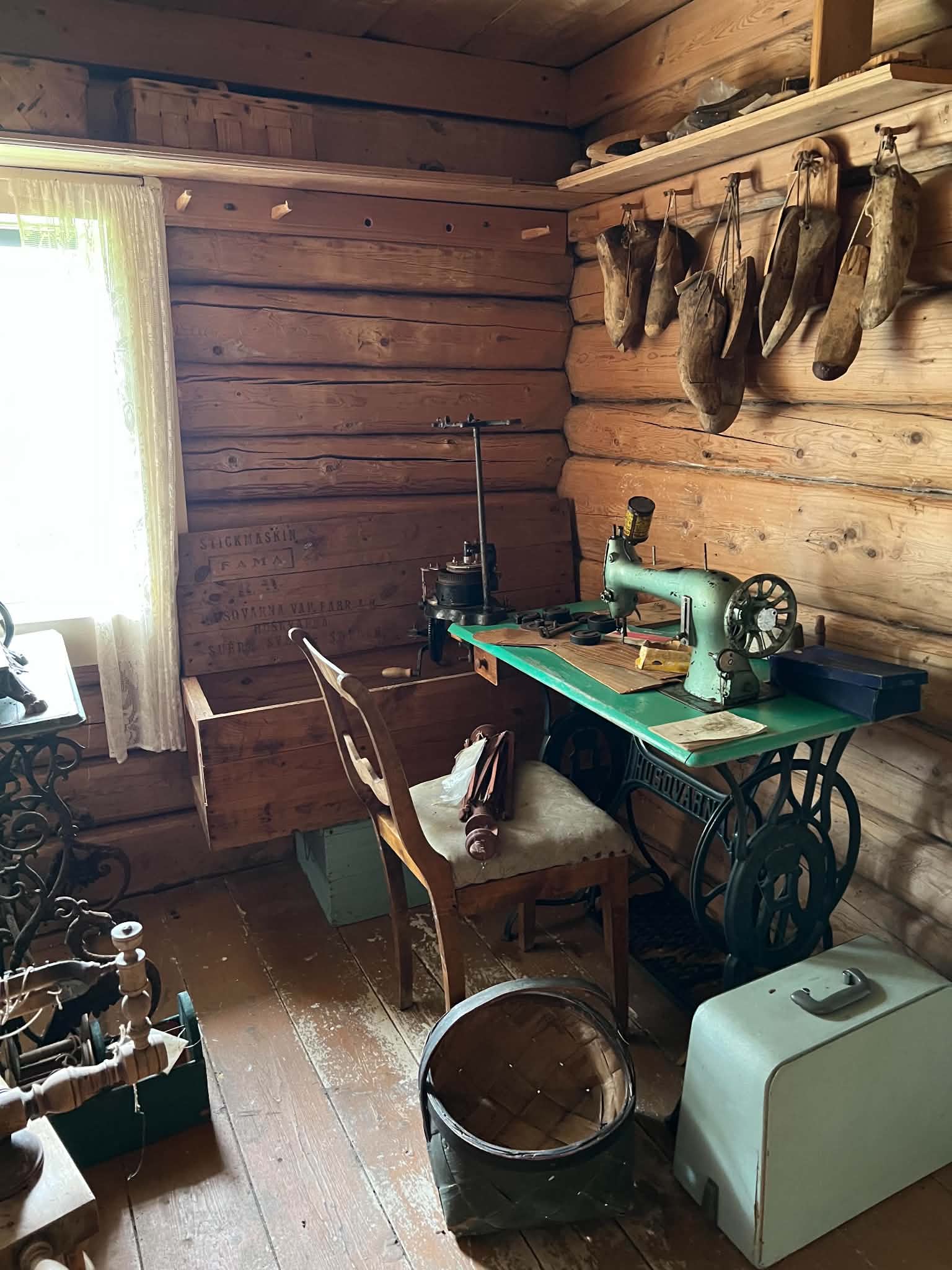
Much of everyday life depended on practical knowledge. Weaving looms, sewing machines, tools and worktables point to clothes and household items being made, repaired and reused.
These skills were part of maintaining a household in communities where distance, weather and limited access to goods mattered. The work and resources available, however, differed between households and social groups.
Historical context
Between sea and land
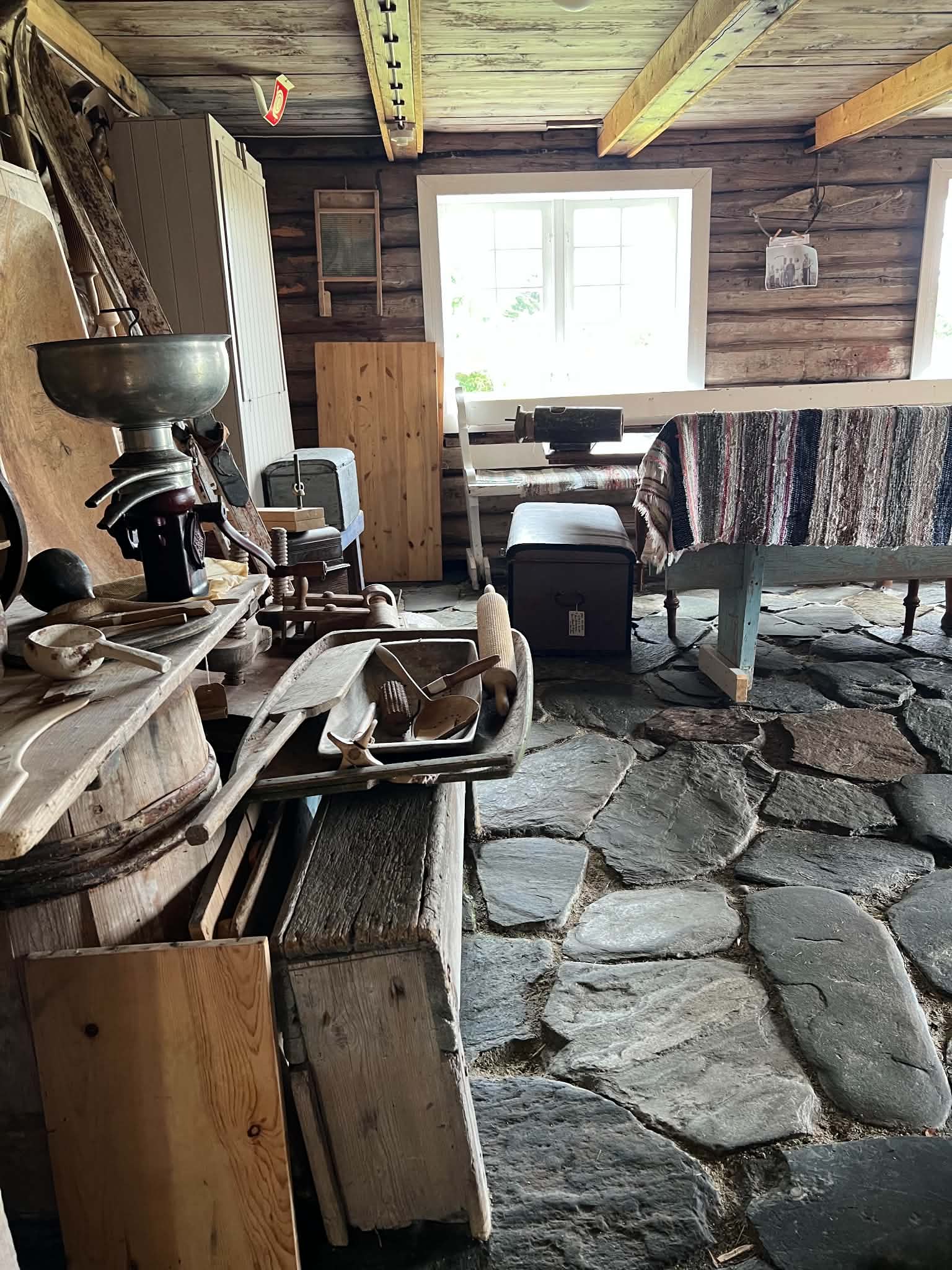
For many coastal households, work did not belong to a single occupation. Fishing, livestock, small plots of cultivated land, food preservation, textile work and the repair of tools and clothing formed parts of the same household economy.
The balance differed between communities and social groups. Fishing-farming households depended on seasonal work and the labour of several family members, while merchants, officials and larger trading households could occupy very different homes and employ servants or other workers.
The sea provided food, work and transport, but it also brought risk. Boats connected the islands to churches, schools, doctors, shops and trading centres. When weather prevented travel, distance became more than a line on a map.
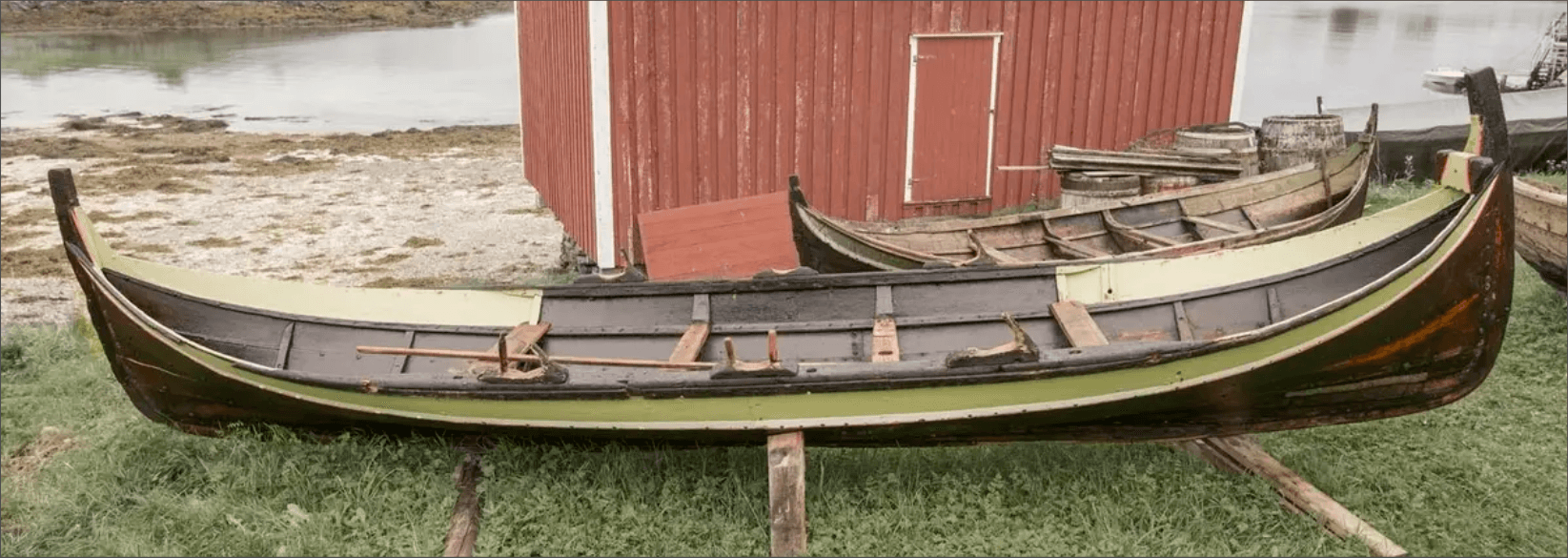
Preserved coastal boat
A boat connected to Sørøya in Austbø, used first for local fishing and later as an island boat for journeys to shared summer pastures.
ProvenanceBought by Nils Hermansen from Rana in 1872 and retained by the family until Hans Nilssen of Husvær donated it to Herøy bygdesamling in 1975. The boat is now preserved in Storbåtnaustet on Herøy. Ownership and use history supplied with the object information; an exact collection catalogue reference has not yet been added.
Object chapter III
The island boat
Fishing, farming and women’s work
Nils Hermansen of Sørøya in Austbø bought this boat from Rana in 1872. It was said to have been fairly newly built at the time, although it had already had another owner. The boat remained in the family until Hans Nilssen of Husvær gave it to Herøy bygdesamling in 1975.
Until around 1920, it was used for local fishing. Edvard Nilssen used it particularly often, usually together with his neighbour Konrad Olsen. Their fishing grounds included the waters around Flæsen and Ytterholmen.
The boat later served for many years as an “øybåt” — an island boat used by women rowing out to milk cattle in the morning and evening. While the cows grazed collectively on the islands, each farm was required to provide boats according to an agreed rota.
The women rowed together from Øybåtstøa, in the centre of the settlement, to the islands where summer barns and grazing cattle were located. The boat is now preserved in Storbåtnaustet on Herøy.
Object record · 1914
Enigheten — a restored firroring
Built for fishing, rowing and sailing with a broad load
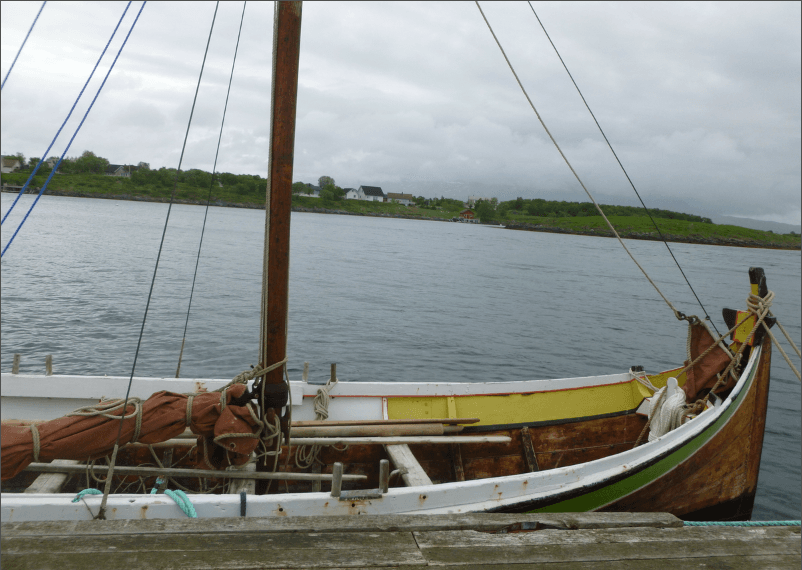
Restored Nordland boat
Enigheten, a firroring built at Bjerka in Sør-Rana in 1914 and later used for fishing, rowing and sailing.
ProvenanceCollection reference HBS.G.10252. The object history, measurements and technical description were supplied from the available collection information. An exact public catalogue URL has not yet been added.
Read together, the two boats document different parts of everyday coastal life without sharing the same use or ownership history. The Sørøya boat connects local fishing with women’s journeys to shared summer grazing, while Enigheten preserves a separate record of fishing, rowing, sailing, transport, ownership and restoration.
The firroring Enigheten was built in 1914 by P. J. Breivik at Bjerka in Hemnes, Sør-Rana. According to the supplied object record, the boat was reportedly registered for fishing.
Toralf Kristian Heen of Nordværnes bought Enigheten around 1990 from an older trader at Forstranda in Gildeskål. A later account attached to the boat says that it had once either been accepted as security for goods or used as payment. This has not been independently verified.
Heen last used the boat at the national gathering in Brønnøysund in 2003. Geir Olsen of Indre Kvarøy bought it in 2017. During the same year, he exchanged it for a firroring managed by Helgeland Museum. That other boat had previously belonged to Olsen’s grandfather and had been bought by Herøy historielag during the 1970s for NOK 400.
Enigheten is a broad-built Nordland boat with six strakes, five thwarts and four pairs of oars. It was rigged for a traditional “sneseil” and has four pairs of thole-pin positions. The boat is described as heavy to row but stable under sail with a broad load, and particularly well suited to gill-net fishing.
The hull is tarred and protected below the waterline with antifouling paint. The supplied object description records red, white and pale-green paint on the upper strake, black-and-white splashboards, dark internal trim and pale yellow, red and white details above a tarred interior bottom.
Technical object record
Inventory number
HBS.G.10252
- Name
- Enigheten
- Object
- Nordland boat
- Classifications
- Nordlandsbåt · Ranværingsbåt · Firroring
- Built
- 1914
- Builder
- P. J. Breivik
- Place built
- Bjerka, Hemnes, Sør-Rana
- Dimensions
- Length 760 cm · Width 205 cm · Stem height 176 cm
- Construction and equipment
- Six strakes · five thwarts · four pairs of oars · four pairs of thole-pin positions · rigged for “sneseil” · relatively broad construction · additional splashboards that can be raised
- Recorded use and performance
- Fishing · sailing · rowing · transport · gill-net fishing · heavy to row · stable under sail with a broad load
Historical context
A house could also be a workplace
Not every preserved coastal interior represents a small fishing household. On Nesna, the Zahl family’s commercial building combined trade and domestic life under the same roof. Its oldest section dates from 1907, and the building held a shop as well as living quarters for the merchant family, servants and employees.
This offers a useful contrast to smaller fishing-farming households. Coastal society included labourers, boat owners, merchants, tenant families, teachers, officials and people who moved between several forms of work.
Sources [1]
1914
The war did not cross Norway’s border. Its consequences did.
Historical context
A neutral country, but not untouched
Norway remained neutral throughout the First World War, but neutrality did not protect households from the economic consequences of the conflict.
Imports became more difficult, goods grew scarce and prices rose sharply. Statistics Norway estimates that Norwegian living costs increased by 156 per cent between 1914 and 1918.
For the Helgeland coast, these national conditions provide important context. The exact effects on individual islands — food supplies, fishing prices, shipping risks and local rationing — varied and require evidence from local newspapers and municipal records.
Sources [11–12]
1918
New machines reached the coast. Old routines did not disappear.
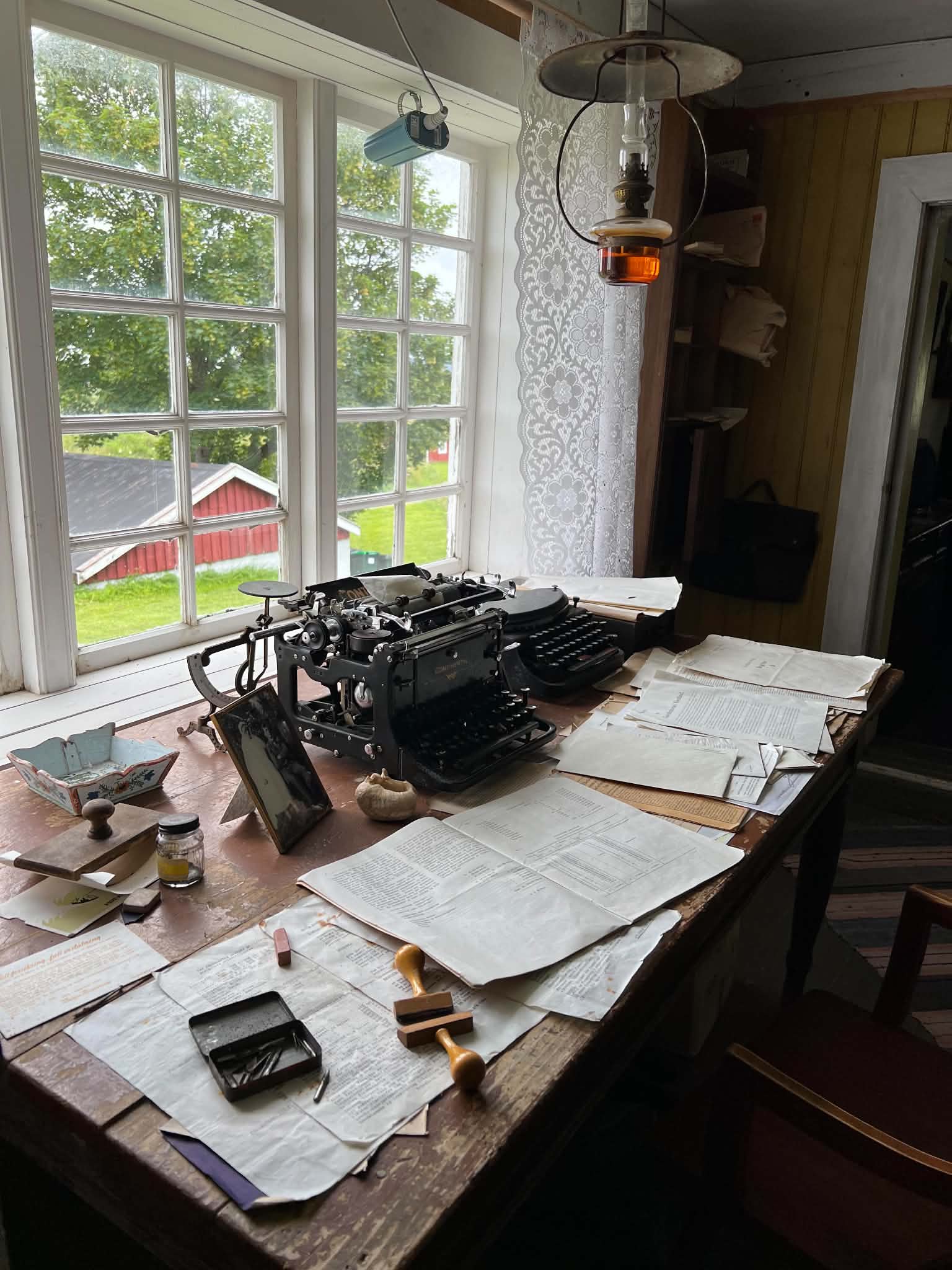
Writing and learning
Writing tools and teaching materials photographed in preserved coastal collections.
ProvenanceThe typewriter is not presented as an ordinary household possession without documented provenance.
Object chapter IV
The written word
School, writing and connection
Education connected even small coastal communities to wider changes in Norwegian society. By the early twentieth century, permanent school buildings had replaced most travelling schools nationally, although distance and scattered settlement continued to shape local education.
Helgeland Museum preserves Klokkergården on Nesna, a school building dating from 1823. Nesna later became an important educational centre: in 1918 a new teacher-training school opened with 56 students, including 34 women taking a one-year course for small-school teachers alongside students following a three-year teacher programme.
Letters, newspapers, school records and municipal documents also connected the islands. A preserved typewriter can illustrate this expanding world of writing and administration, but it is not presented here as an ordinary household possession without documented provenance.
Sources [2–4]
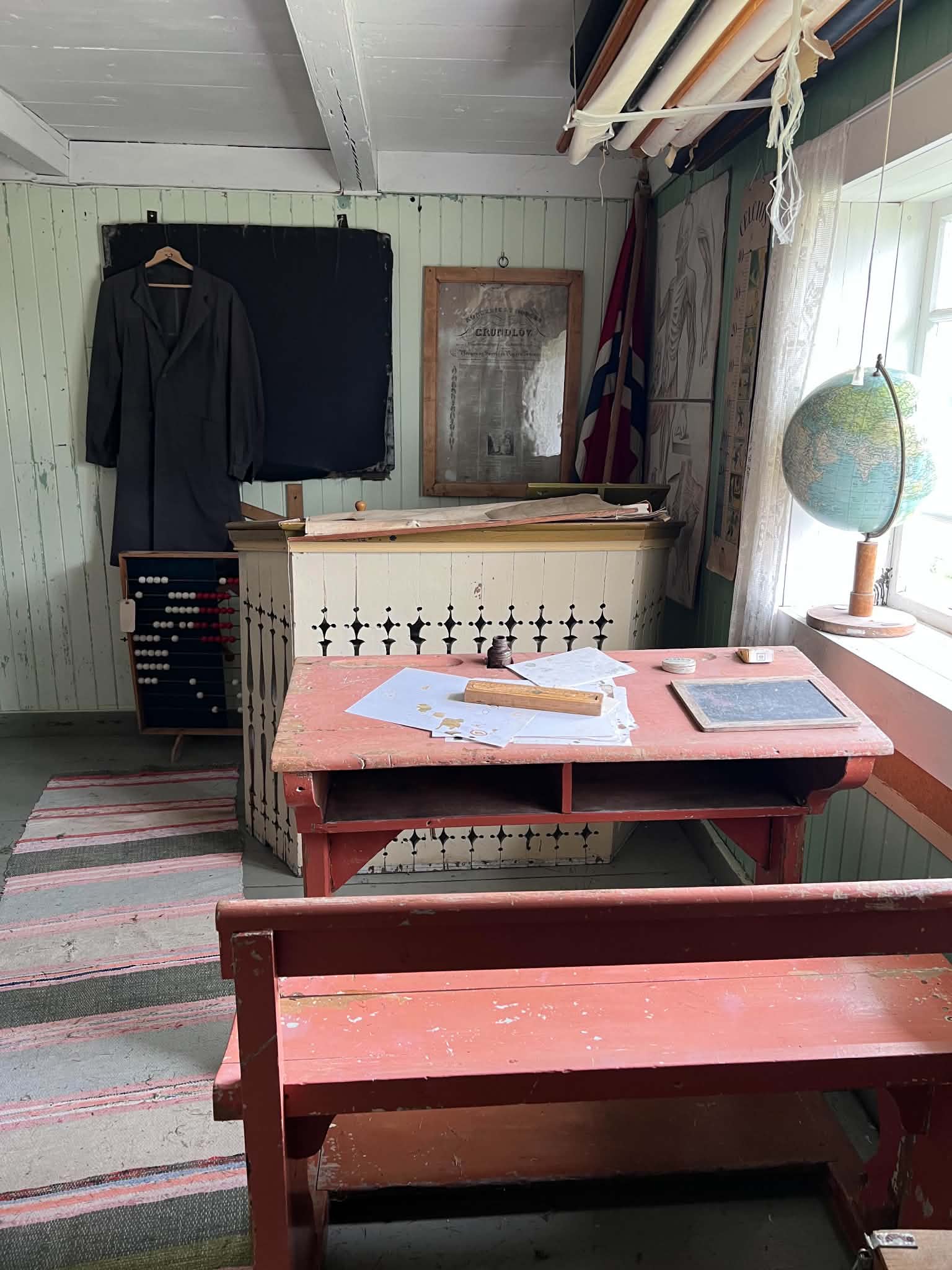
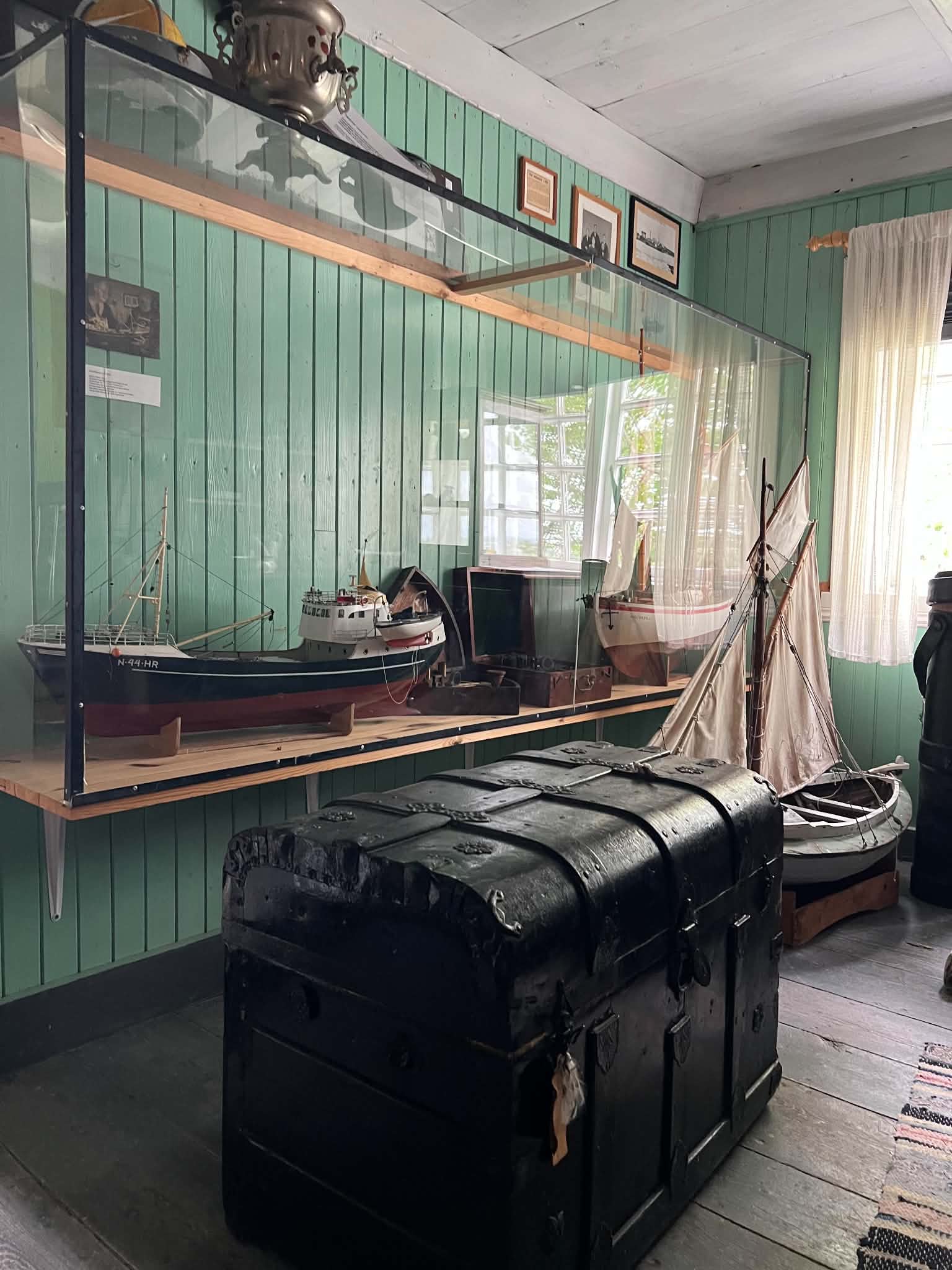
Maritime object
Model fishing boats and maritime objects photographed in a preserved Helgeland collection.
ProvenanceThe objects are not assigned here to a named island, household or date.
Object chapter V
The sea
Motors, teachers and a changing coast
During the early decades of the twentieth century, new technologies gradually changed work and communication along the coast.
Arkiv i Nordland preserves interviews collected in 1981 about the transition to motor-powered fishing boats in Rødøy between 1900 and 1920. These later recollections preserve memories of a change that affected travel, fishing range and working routines, but they remain recollections recorded decades afterwards.
Modernisation did not arrive everywhere at once. Motorboats, electricity, telephones and radios reached different communities at different times, while older household routines continued alongside new technology.
A Helgeland Museum catalogue entry for a fish-processing photograph estimated to date from 1920–1940 associates its use with Dønna. The catalogue treats Dønna as certain but the photographed location itself as probable; it is a separate record, not an attribution for the photograph shown here.
Sources [5–6]
Historical evidence
Records that help the rooms speak.
1907
The oldest part of the Zahl commercial building on Nesna dates from 1907.
[1] Helgeland Museum: Nesna Museum and the Zahl commercial building1918
Teacher education opened on Nesna with 56 students.
[3] Arkiv i Nordland: The twentieth century in Nesna1920–1940
A Helgeland Museum photograph documents fish-processing work associated with Dønna.
[6] DigitaltMuseum: Work at a fish-processing site1942
Construction of Grønsvik coastal fort began during the German occupation.
[8] Helgeland Museum: Grønsvik coastal fort
1940
Occupation entered ordinary rooms.
Historical context
Occupation and everyday adaptation
The German occupation from 1940 to 1945 changed both the visible landscape and the routines of ordinary life along the Helgeland coast.
Military installations were established at strategic points, including Grønsvik in Lurøy, Ylvingen in Vega and sites around Nesna. Grønsvik coastal fort was constructed as part of the Atlantic Wall, and Helgeland Museum records that prisoners of war were forced to take part in its construction.
For civilians, occupation also meant rationing, restrictions, shortages and uncertainty. Nationally, food, clothing, fuel and other necessities became increasingly regulated. Local experiences nevertheless differed according to access to fishing, livestock, cultivated land, shops and transport.
Sources [7–8, 13]
Night of 31 August 1944
Lånan, Vega Archipelago
Human story · later accounts
Lånan: a quiet island becomes part of the war
- 01
A remote island became connected to clandestine communication and weapons transport.
- 02
German forces moved closer to discovering the operation.
- 03
Children and adults were evacuated towards Shetland during the night.
- 04
Some details survive through later family memory and still require archival verification.
Recorded account
One of the strongest preserved stories comes from Lånan in the Vega archipelago.
Later family accounts describe how the small island community became connected to clandestine communication and the transport of weapons from Britain. As German forces moved closer to discovering the operation, the civilian population was evacuated to Shetland during the night of 31 August to 1 September 1944.
The published accounts name members of the Nilsen and Johansen families and describe children and adults leaving with little warning. Some details survive through later family memories rather than contemporary diaries, so vessel movements, passenger numbers and individual resistance roles need cautious treatment until matched with naval and archival records.
1945
Peace arrived before every shortage ended.
Historical context
After 1945
Peace did not immediately restore every connection or remove every shortage. Rationing continued for some goods, while communities faced the practical work of rebuilding, adapting military structures and modernising transport, schools and homes.
During the following decade, improved boats, communications and public services gradually reduced some forms of isolation. At the same time, population movement began changing many of the smallest island communities. Detailed Helgeland evidence for 1945–1955 still requires additional local research.
The objects remain. The routines changed. The coast remembers both.
Final reflection
What the objects leave behind
The preserved rooms do not offer a single picture of life on the Helgeland coast. They belong to different buildings, communities and social worlds.
Together, however, they preserve traces of the work that filled ordinary days: cooking, repairing, weaving, writing, teaching, storing food and preparing for another journey across the water.
Their value lies not in pretending that time has stood still, but in allowing the surviving objects to meet the records and memories of the people who lived here.
Research notes
Sources and further reading
Local museums and archives
- [1]Helgeland Museum: Nesna Museum and the Zahl commercial building
- [2]Helgeland Museum: Old-fashioned school in old school buildings
- [3]Arkiv i Nordland: The twentieth century in Nesna
- [4]Nord University: The history of Høgskolen i Nesna
- [5]Arkivportalen: Arkiv i Nordland collections on coastal change
- [6]DigitaltMuseum: Work at a fish-processing site
- [7]Helgeland Museum: War and occupation history
- [8]Helgeland Museum: Grønsvik coastal fort
- [9]Lånan: Krigen på Lånan (PDF)
- [10]Lånan: When the war came to Lånan
National historical context
Material requiring further verification
This visual essay combines photographs of preserved interiors with material from museums, archives and edited historical sources. The photographs have not been assigned to individual households or islands unless provenance has been independently documented. Research into local First World War conditions, individual object histories and some wartime accounts remains ongoing.
Related journal notes
Field Notes
Field Notes from Herøy
A growing field journal from four slow days on Herøy, following quiet roads, small harbours and the everyday coastal landscapes between planned stops.
Visual Note
Blue Hour on the Helgeland Coast
A slow evening drive where sea mist softens the islands and the last ferries cross silver water.
Field Note
The Road to Senja
A quiet route through Arctic coastlines, mountain shadows and roads that seem to disappear into the sea.